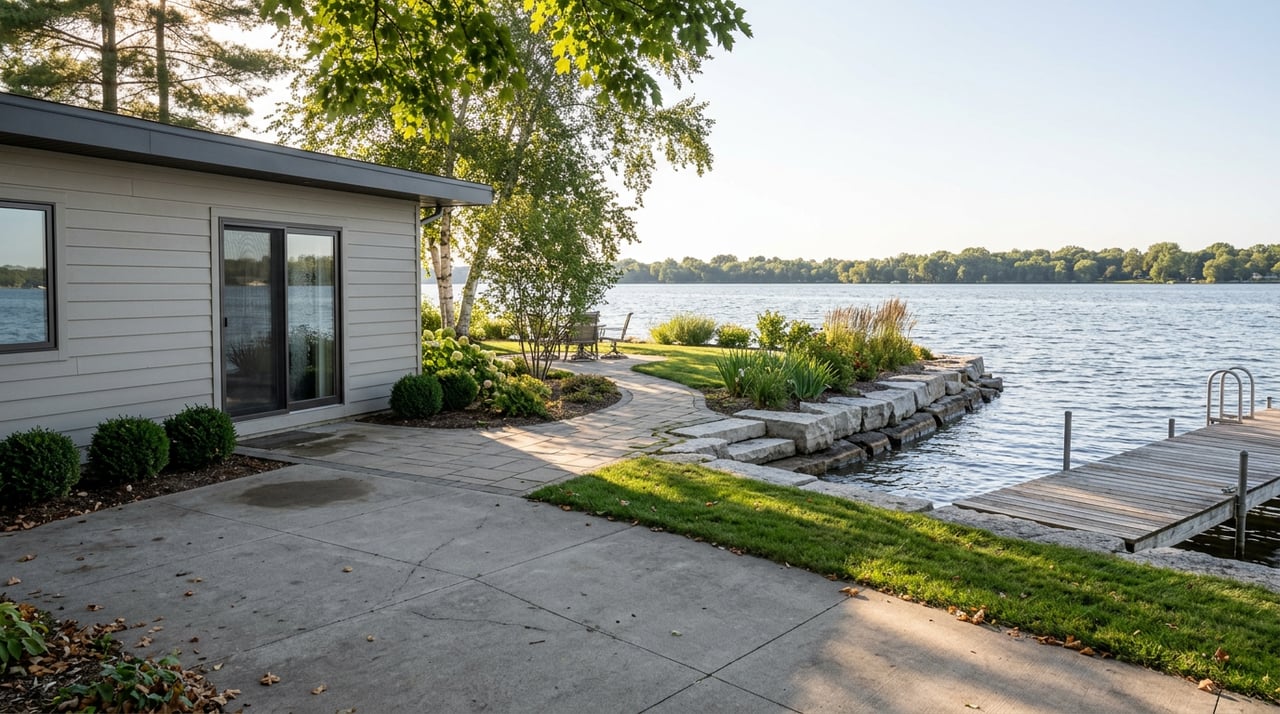
Two lakes. One peninsula. Endless choices. If you are drawn to the idea of stepping from your back door onto a dock, North Muskegon puts you close to it all. You get the calm of an inland lake, the marina scene on a harbor lake, and a navigable path to Lake Michigan. In this guide, you will learn where to look, what different waterfront options offer, how pricing works today, and the key permits and inspections to check before you buy. Let’s dive in.
North Muskegon waterfront at a glance
North Muskegon sits between Bear Lake and Muskegon Lake, with a short channel connecting the two. Bear Lake is about 415 acres with an average depth of roughly 7 feet, and Muskegon Lake connects to Lake Michigan for big‑water access. The local watershed group outlines these connections and lake details in its overview of the Bear Lake and Muskegon Lake sub‑watersheds.
A positive note for long‑term value: after decades of cleanup and restoration, Muskegon Lake was removed from the EPA’s “Area of Concern” list in 2025. The EPA’s announcement highlights the completed remediation and expected recreational and economic benefits. That investment supports confidence in the area’s future.
Property types and tradeoffs
Bear Lake private frontage
Bear Lake’s shoreline is primarily residential, and many homes have private frontage and docks. You will find a classic lake lifestyle here: swimming off the dock, paddle mornings, and the option to boat through the channel to Muskegon Lake. Frontage is limited, so parcels with wider shoreline, usable beaches, and updated homes command premiums. Expect a quieter, more residential feel.
Muskegon Lake condos and marinas
Muskegon Lake is larger and more active, with marinas and condo communities that often include or offer access to boat slips. Condos can be a lower‑maintenance way to get on the water, with HOA services and, in some cases, deeded or leased slips. Single‑family homes along Muskegon Lake give you private shoreline and land, which can mean more maintenance and higher variability in resale due to shoreline improvements and condition.
Channels and coves
Channel and cove lots in North Muskegon give you protected water with less wind and wave exposure. These can be ideal for mooring, but always verify depth and navigability for your boat size before you assume unrestricted access. Protected water can be a lifestyle plus and may reduce wear on docks and lifts.
Public access versus private frontage
Even if you do not own shoreline, North Muskegon offers parks, a public beach on Bear Lake, and boat launches that make waterfront living more accessible. Private frontage delivers privacy, direct access, and strong resale appeal. Public access points support a similar lifestyle at a lower price, with the tradeoff of shared facilities and no private shoreline control.
What homes cost today
Waterfront inventory in North Muskegon is lean, so pricing moves with each new listing and sale. Across all home types in the city, the published median sale price has sat in the mid‑$300,000s over the recent 12‑month window according to the North Muskegon market overview. True lakefront is a smaller slice of the market and can trade faster when listings appear.
Recent sales and listings show helpful bands:
- Condos with Muskegon Lake access and, in some cases, slips often trade from the low‑to‑mid $200,000s into the $300,000–$400,000 range depending on size, finishes, and slip inclusion. For example, North Pier‑style condo listings at 2411 Lake Ave show this spread over time, like the Unit 52 example.
- Smaller single‑family waterfront homes often fall in the mid‑$400,000s to $700,000 range, with condition, frontage length, and shoreline type driving value.
- Premium Bear Lake estates and updated homes can reach $700,000 and higher. A renovated Bear Lake home at 490 S Bear Lake Rd sold in the high‑$600,000s in late 2025, illustrating how quality and frontage push price above the city median. See the sale record for context.
What moves price the most?
- Usable frontage and shoreline type, including beach area and seawall condition.
- Dock and lift status, permits, and water depth off the dock.
- Lot size, privacy, and orientation to prevailing winds.
- Age and quality of renovations, plus garage and outbuilding utility.
- Association amenities for condos, especially deeded or leased slip rights.
If you are comparing two lakefront homes, a well‑maintained shoreline with documented permits and repairs often lifts value more than an extra bedroom. Ask for shoreline documentation early.
Seasonality and lifestyle
The West Michigan boating season typically runs spring through early fall. Winter ice can be hard on docks and lifts, so plan inspections with the seasons in mind. Great Lakes water levels also rise and fall seasonally and year to year, which can impact beach width, dock placement, and erosion risk. For context, NOAA’s Great Lakes lab tracks current and historic water levels.
Lifestyle is a big part of the draw here. On Bear Lake, you will see paddlers and anglers at sunrise. On Muskegon Lake, you will find marinas, fuel, and restaurants within a short boat ride. Community events and nearby Muskegon State Park add four‑season appeal, from beach days to hiking and winter trails.
Due diligence checklist for buyers
Use this quick checklist to protect your investment and avoid surprises. Ask for documents up front and build the right contingencies into your offer.
- Docks and boatlifts. Confirm what conveys with the sale, ownership status, and any association rules. Many permanent structures require state permits. Review permits and repair invoices, and consider a marine inspection. Michigan EGLE outlines permitting for bottomlands, docks, seawalls, and similar work in its Inland Lakes & Streams guidance.
- Seawalls and shore protection. Look for movement, undermining, or patchwork repairs. If past work was done below the ordinary high‑water mark, verify permits. The same EGLE guidance applies here.
- Septic or municipal sewer. Verify system type and get recent inspection and pump‑out records for septic. Municipal sewer availability can affect both cost and resale. As an example of the type of resource to review, see the City of Muskegon’s sewer and water documentation. Check the local municipality for the specific address.
- Flood zones and insurance. Many waterfront lots are mapped in FEMA flood zones. Review Flood Insurance Rate Maps and ask your lender and insurer about coverage and elevation certificates. Start with FEMA’s flood map and lending guidance.
- Water quality and algae advisories. Bear Lake and Muskegon Lake have been part of ongoing monitoring and restoration. Ask for recent monitoring results if you have concerns. The Muskegon Lake Watershed Partnership shares sub‑watershed resources and updates.
- Moisture and foundation checks. Waterfront homes can see elevated groundwater and humidity. Request crawlspace, HVAC, and moisture imaging checks, and address grading near the shoreline side of the structure.
Offer language to discuss with your agent can include: subject to dock and seawall inspection and verification of permits; septic inspection and pump‑out; review of FEMA flood zone and flood‑insurance cost; seller disclosures to include any documented shoreline repairs.
Permits and shoreline rules
Shoreline work often needs permits at the state and sometimes federal level. In Michigan, EGLE’s Water Resources Division administers permits for structures on bottomlands, permanent docks, seawalls, dredging, and marinas. Seasonal private recreational docks may be exempt if they meet specific conditions, but many changes require a Joint Permit Application. Learn the basics in EGLE’s permitting guidance. For larger navigable water work, the U.S. Army Corps and local building departments may also be involved. When in doubt, verify before you build.
How to compete and resell well
Inventory on the water is limited in North Muskegon, and waterfront homes often draw concentrated interest when they list. The city market snapshot shows why timing and preparation matter. A clean, complete offer with the right inspections, proof of funds, and flexible timelines helps you compete without skipping key protections.
For resale, focus on what future buyers will value most: safe and permitted shoreline, usable dockage with adequate depth, well‑documented maintenance on seawalls and lifts, and thoughtful interior updates that complement the property’s setting. If you buy a condo, keep association documents, slip details, and update records organized for an easier sale later.
Next steps
If you are comparing Bear Lake privacy with Muskegon Lake marinas, or you want alerts on rare private‑frontage listings, you need a local strategy and fast communication. I can help you weigh property types, read shoreline reports, verify permits, and negotiate with confidence. I also provide pricing analyses for sellers and support for relocation or senior transitions across West Michigan.
Ready to find your fit on the water? Contact Tricia Carlson for a free neighborhood market consultation.
FAQs
What types of waterfront homes are in North Muskegon?
- You will find Bear Lake single‑family homes with private frontage, Muskegon Lake condos and single‑family homes near marinas, and channel or cove lots with protected moorage.
How much do North Muskegon waterfront homes cost?
- Recent ranges show condo entries in the low‑to‑mid $200,000s, smaller single‑family waterfront from mid‑$400,000s to $700,000, and premium Bear Lake estates at $700,000 and higher, with the city median for all homes in the mid‑$300,000s.
Can I add or rebuild a dock or seawall?
- Many permanent docks and seawalls need state permits and sometimes federal or local approvals; review Michigan EGLE’s permitting guidance and verify existing permits before you buy or build.
Are waterfront lots in flood zones and will I need insurance?
- Many are mapped in FEMA flood zones; check Flood Insurance Rate Maps and ask your lender and insurer about required coverage and possible elevation certificates.
How long is the boating season and can I reach Lake Michigan?
- The main boating season runs spring through early fall, and you can reach Lake Michigan by boating from Bear Lake through Muskegon Lake and then out the channel to the big lake.
What inspections should I include for a lakefront purchase?
- Add dock and seawall inspections with permit verification, septic inspection and pump‑out if applicable, moisture and foundation checks, and a review of FEMA flood zone and insurance costs.